

GIntroduction
Behind every successful digital product is a powerful UX process that balances user needs with business goals. A well-executed UX process not only improves usability but also enhances engagement and drives conversions. At Opulance Creative Studio, we follow a systematic, user-centered approach to create digital experiences that delight.
1. User Research: The Foundation of UX
Every great UX journey begins with research. We dive deep into understanding users — their goals, behaviors, motivations, and pain points. This is done through:
- User interviews and surveys
- Competitor benchmarking
- User personas creation
- Analytics review (Google Analytics, Hotjar, etc.)
This phase gives us the insights to solve real problems instead of designing based on assumptions.
2. Information Architecture: Organizing for Clarity
Once we understand the user, we structure the content and navigation logically. Information architecture (IA) ensures that users can find what they’re looking for quickly.
- Sitemap development
- Content inventory
- User flow diagrams
A clean IA simplifies the user’s journey and improves SEO as well.
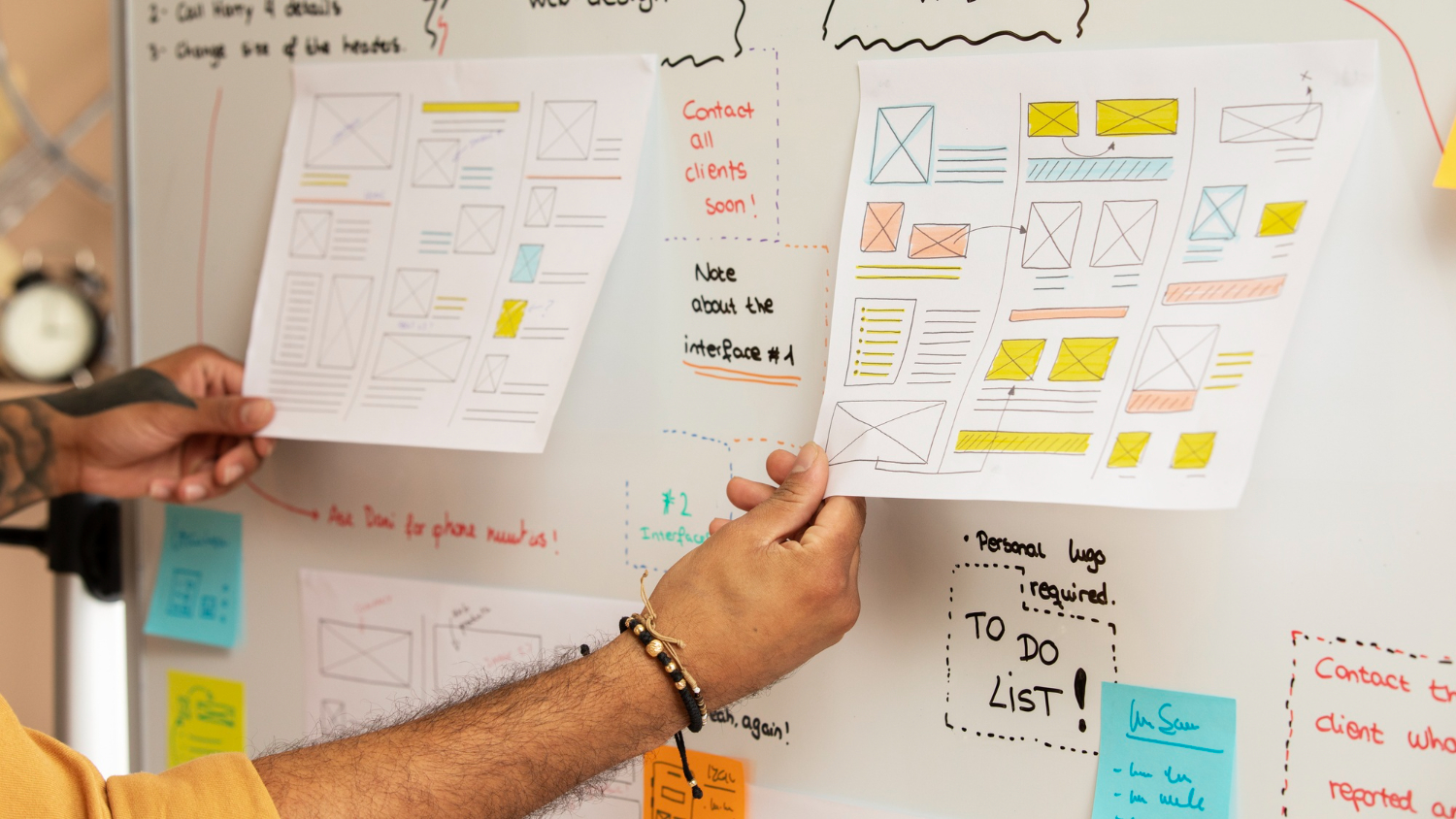
3. Wireframing: Visualizing the Blueprint
Wireframes are skeletal outlines of a page layout. We focus on structure, hierarchy, and interaction — not visuals — at this stage.
- Low-fidelity sketches to explore layout ideas
- Mid-fidelity wireframes for clearer content placement
- Early feedback from stakeholders and users
Wireframes reduce the risk of costly revisions later.
4. Prototyping: Bringing Interaction to Life
Prototypes simulate the user experience without writing a single line of code. Tools like Figma allow us to create interactive mockups.
- Clickable navigation flows
- Test user journeys
- Shareable with teams and clients
Prototypes make it easy to validate the concept early and iterate fast.
5. Usability Testing: Validate Before You Build
Usability testing uncovers what works — and what doesn’t — directly from the user.
- Remote or in-person testing
- A/B testing for decision-making
- Eye-tracking (optional for enterprise projects)
We refine based on feedback to enhance ease-of-use and satisfaction.
6. UI Design: Visuals That Enhance Experience
Once the UX foundation is set, we layer on the visual design. This includes:
- Brand-aligned color schemes and typography
- Interactive elements and micro-interactions
- Responsive design for mobile, tablet, and desktop
Our UI design ensures users feel confident and comfortable as they engage with the product.
Conclusion
A strategic UX process turns ideas into products that people love using. At Opulance Creative Studio, we tailor each step to your business and audience to maximize impact.